
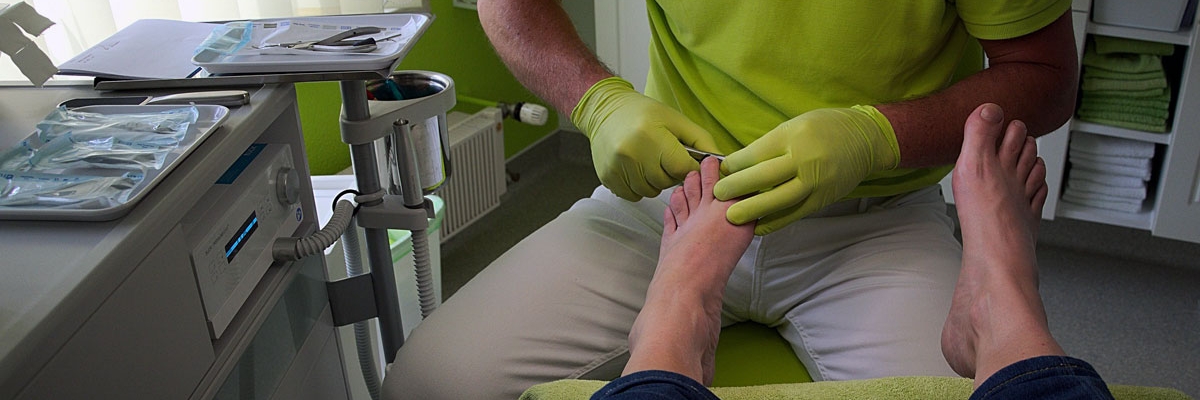
Nail Surgery
A minor procedure under local anaesthetic that ends ingrown toenail pain for good in most cases.
How Nail Surgery Can Help
- Ingrown toenails
- Recurring nail infections
- Persistent nail pain
- Curved or deformed nails
- Nail damage from injury
Nail surgery (nail avulsion) is a minor operation to remove the whole nail, or part of a nail, where there is an ingrown toenail. It is a safe, well-established procedure carried out by our podiatrist under local anaesthetic — and for most patients it brings an end to a painful, recurring problem.
What is an ingrown toenail?
An ingrown toenail occurs when the edge of the nail grows into the skin at the side of the nail, causing pain, a wound and often infection. Common causes include:
- A curved nail that grows into the toe
- Incorrect nail cutting, leaving a sharp, ragged edge
- Nail picking, tearing or injury
- Narrow shoes pushing the nail into the toe
Will I need nail surgery?
Cutting the nail can relieve the pain or head off infection, but it will not necessarily fix the problem for good. We recommend nail surgery if pain or infection keeps returning. Non-surgical alternatives include removing the nail spike and regularly trimming the corners of the nail — your podiatrist will talk you through the options at your assessment.
Nail surgery is successful in around 8 out of 10 cases. After healing, the area is usually pain-free and the nail does not usually grow back.
What happens at the assessment appointment?
We carry out a full foot assessment and general health checks, explain what the surgery involves and discuss the best treatment options for you. We assess how much nail needs to be removed — most patients need only a small section taken from the side of the nail, leaving a slightly narrower nail that no longer digs into the skin; occasionally the whole nail is removed. Please bring a list of all medicines you take, and tell us about any allergies. We will answer your questions, take your consent and book your operation. You can change your mind at any time, even after signing the consent form.
What happens during the surgery?
After re-checking your medical history, we cleanse the foot with antiseptic and numb the toe with local anaesthetic — usually two small injections. A tight rubber band is placed over the toe to reduce bleeding, the nail or nail edge is gently lifted and removed, and the nail root is treated with phenol to prevent regrowth. A sterile bandage is applied, and the whole appointment takes about an hour.
Recovery and risks
Average healing takes six to eight weeks. Rest with your foot up for the first 48 hours, keep the toe dry until healed, and avoid sport and swimming during that time. Like any operation, nail surgery carries some risks — including infection, temporary soreness or numbness, a reaction to the phenol, regrowth of the nail, or a change in the nail’s appearance. Serious complications are rare, and your podiatrist will explain everything you need to know — including how to prepare for the day — before you decide to go ahead.
What Clients Say About Our Nail Surgery
“We were delighted with the caring service and professional treatment we received at the Fairlee Wellbeing Centre last weekend. All the staff were very helpful and friendly and the Podiatrist, Ian Bruce, was excellent at explaining and carrying out Nail Surgery on my teenage son. I highly recommend this place and will be sure to return myself.”— Jenny Capaccio
Ready to Book Your Nail Surgery?
Secure your preferred time — evenings and Saturdays included. New clients get 20% off their first treatment this month.